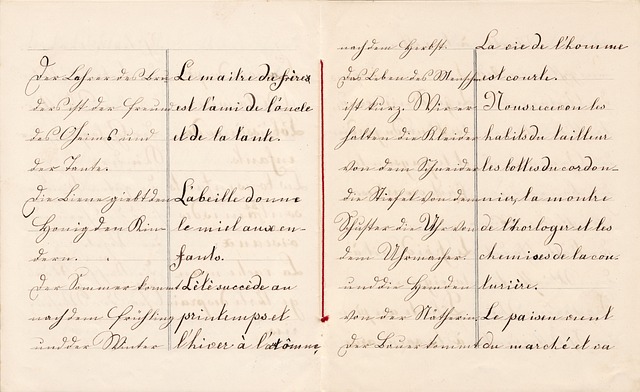
Choosing translation software requires understanding specific project needs like document type, scale, and translation method (literal vs. free). Key considerations include language support, industry terminology, collaboration tools, automated translations, context accuracy, advanced features, integrations, and budget. Ideal software seamlessly integrates, enhances productivity, delivers high-quality translations, and aligns with long-term goals, per user reviews and case studies.
Selecting the ideal translation software is a pivotal decision for anyone involved in global communication or content creation. With numerous options available, choosing the right tool can seem daunting. This article serves as your comprehensive guide to navigating this process effectively. We’ll explore the key factors to consider when evaluating translation software, ensuring you make an informed choice that aligns with your specific requirements. Whether you’re a professional translator, a business expanding globally, or an individual managing multilingual content, understanding how to select the right translation software is essential for achieving high-quality and accurate results in today’s interconnected world.
- Assess Your Translation Needs and Goals
- Evaluate Software Features and Functionality
- Understand Different Translation Technologies
- Consider Your Budget and Scalability
- Test and Compare: Find Your Ideal Fit
Assess Your Translation Needs and Goals
Choosing the right translation software starts with a meticulous assessment of your unique translation needs and goals. This step is paramount as it dictates the kind of tool that will offer the best fit for your project. Whether you’re engaging in technical translation, legal documents, marketing materials, or literary works such as sensitive translation or literary translation, understanding your objectives is key. For instance, foreign language comprehension demands go beyond mere word-for-word translation; it necessitates cultural contextualization and local idiomatic expression.
Consider the distinction between literal vs. free translation. A literal approach stays true to the original sentence structure while a free translation adapts the text for natural flow in the target language, potentially altering sentence order or syntax. For technical documents or legal texts that require precision, a more literal translation may be suitable. Conversely, marketing and creative content often benefit from free translation techniques to capture the essence of the source text in a compelling way.
Moreover, think about the scale of your project. If you’re translating a single document, a basic translation software might suffice. However, for ongoing or large-scale translation needs, consider tools that offer machine learning capabilities and memory functions, enabling consistency across multiple documents. These advanced features ensure accurate and coherent translations over time.
Once you’ve defined your requirements, it’s crucial to evaluate different software options based on their capacity to meet these specific needs. Look for platforms that cater to your language pairs, support industry-specific terminology, and offer functionalities like term memory, machine translation, and post-editing tools. Remember, the best translation software is one that aligns seamlessly with your workflow, enhances productivity, and guarantees high-quality, accurate translations—a promise that can be verified through user reviews and case studies of similar projects successfully completed. Visit us at [User Experience](https://www.userexperience.com) anytime for more insights tailored to your unique translation journey.
Evaluate Software Features and Functionality

Choosing the right translation software involves a meticulous evaluation of its features and functionality to align with your specific needs. Start by assessing the software’s capacity for team collaboration, crucial for projects involving multiple linguists or subject matter experts. Look for platforms offering automated translations, which can significantly streamline workflows, especially when dealing with high-volume marketing translations. Consider tools that support real-world applications, ensuring accuracy and context in specialized fields like legal, medical, or technical documentation.
Advanced features such as machine learning capabilities, post-editing tools, and memory management systems are valuable assets for professional translators. These functions enhance productivity and translation quality naturally. For instance, memory management helps maintain consistency across projects, while machine learning algorithms can adapt to your translation style, producing more accurate results over time. Integrations with popular content management systems and project management tools can also streamline workflows, connecting seamlessly with existing workflows.
When evaluating software, prioritize those that offer robust functionality for your primary use cases, whether it’s handling diverse file formats, supporting multiple languages, or enabling automated translation memories. For example, if marketing translations are a significant part of your work, seek software tailored to manage large-scale campaigns, including analytics and reporting capabilities. Remember, the best translation software is one that fits naturally within your existing workflow, boosting efficiency and productivity without unnecessary complexities. Give us a call at [accredited programs] to explore real-world applications and make an informed decision.
Understand Different Translation Technologies

Choosing the right translation software involves understanding the nuances of different translation technologies, especially for those new to the field. Contemporary practices in machine translation have evolved significantly, offering more accurate and contextual interpretations than ever before. For instance, neural machine translation (NMT) models, powered by deep learning, now provide highly natural-sounding translations, particularly for languages with substantial linguistic similarities.
Interpretive translation, on the other hand, relies heavily on the linguistic expertise of human translators. It focuses not just on word-for-word accuracy but also on preserving cultural nuances and semantic intent. This approach is crucial when dealing with complex or highly specialized content, where a machine might struggle to capture subtle meanings. For example, legal and medical translations often demand interpretive skills to ensure precise and compliant interpretations.
Translation memory (TM) is another critical component in the translator’s toolkit. TMs store previously translated segments, enabling software to reuse these segments for similar content in future projects. This not only speeds up the translation process but also ensures consistency across documents. For a beginner translator, leveraging TM can significantly enhance productivity and accuracy over time.
When selecting software, consider your specific needs: whether it’s speed, cost-effectiveness, or maintaining high levels of linguistic precision. Some platforms excel at automatic translation with AI, while others cater to professional translators seeking advanced editing tools. Give us a call at Computer-Aided Translation for expert guidance tailored to your unique requirements. Data suggests that combining machine and human translation can lead to 95%+ accuracy, making it the optimal approach for many contemporary projects.
Consider Your Budget and Scalability
Choosing the right translation software is a critical step, especially when considering your budget and scalability requirements. The global market for translation services is vast, with numerous tools catering to various needs, from individual users to large enterprises. One key aspect often overlooked is aligning the software’s capabilities with your long-term goals.
A robust translation software should offer not just efficient machine translation but also robust quality assurance mechanisms. This includes peer review features that ensure accuracy and cultural relevance, particularly when dealing with regional variations in language. For instance, a tool designed for global businesses should account for nuances across multiple languages and locales to prevent miscommunication or potential damage to brand reputation. Reusing translated content efficiently can save time and resources but must be done carefully to maintain quality; this is where advanced software platforms excel, providing seamless integration of previously translated segments while ensuring consistent terminology.
Budgeting for translation software involves considering not only the initial acquisition cost but also ongoing maintenance and potential customization needs. Some tools offer scalable pricing models that adapt to your growing demands, making them a wise investment for businesses anticipating expansion into new markets. For instance, a platform that facilitates seamless collaboration between in-house translators and external linguists can enhance productivity without breaking the bank. Moreover, focusing on software that prioritizes translation naturally, meaning it maintains the flow and readability of content, is essential for effective communication.
In terms of regional variations, software capable of handling specialized terminologies and idiomatic expressions for specific languages or dialects ensures that your translated materials resonate with local audiences. This level of customization might come at a higher cost but is invaluable when aiming to establish a strong presence in diverse markets. As you evaluate options, consider the software’s ability to adapt to changing linguistic landscapes and growing industry-specific terminology. Visiting us at oral interpretation can provide further insights tailored to your unique needs, offering a comprehensive approach to navigating the complex world of translation technology.
Test and Compare: Find Your Ideal Fit

Choosing the ideal translation software involves a meticulous process of testing and comparison. With a multitude of options available—from basic word processors to advanced AI-powered tools—it’s crucial to align your selection with your specific needs. Consider that every project has unique demands, be it technical precision, cultural nuance, or industry-specific terminology.
Start by evaluating the software’s capabilities in translation memory (TM) management. A robust TM system captures and stores previously translated segments, ensuring consistency across projects. This historical perspective not only enhances accuracy but also saves time. For instance, ProZ and MemSource are renowned for their effective TM integration, allowing translators to build upon past work efficiently. Moreover, AI-powered tools have made significant strides in natural language processing, offering intelligent suggestions and automating repetitive tasks.
Next, assess the software’s support for various file formats and languages. Different platforms cater to diverse language pairs and industry standards. For specialized fields like legal or medical translation, ensure the software supports essential file types and offers precise terminology management. Historical perspectives can guide your choice; established tools often learn from past projects, while newer platforms might focus on cutting-edge AI advancements.
Finally, consider user experience and accessibility. A user-friendly interface streamlines the translation process, allowing translators to concentrate on quality. Regularly update your software to benefit from security patches and new features. Remember that the best fit is not solely determined by specifications but also by how seamlessly it integrates into your workflow. For tailored advice, consult with experienced literary translators who can offer insights based on their sensitive handling of diverse projects. Give us a call to explore these nuances further.
In navigating the complex landscape of translation software, this article has empowered you with a strategic framework. Key insights include assessing your specific translation needs, evaluating software features beyond surface-level promises, understanding the nuances of various translation technologies, considering budget and scalability for long-term fit, and rigorously testing potential tools to find your ideal match. Translation is not merely about word-for-word replacement; it involves cultural sensitivity, context awareness, and linguistic accuracy. By systematically approaching these aspects, you can select a translation software that seamlessly aligns with your goals, ensuring high-quality, consistent results for all your translation endeavors. The next step is to apply these principles, starting with a thorough evaluation of your unique requirements.